

How to Make Dry Cured Salami at Home
Dry cured salami is a fermented, dry-aged pork sausage made for serious charcuterie boards. This homemade salami recipe combines pork butt, PS Seasoning's #385 German Salami Seasoning, whole peppercorns, and a starter culture, then ferments and dry ages for 4-8 weeks in the Reserve 50 Dry Ager until firm, tangy, and clean-sliced. Skip the deli counter and cure your own.
Quick tips for Dry Cured Salami:
Tip 1: Fermentation hack: Oven off, oven light on.
The light alone holds the inside of your oven around 90°F, which is the exact temperature your culture needs to eat the dextrose and produce lactic acid. No fermentation chamber required. Bag the sausages with the brine bag to trap humidity, set it inside for 18-24 hours, until your pH will drop below 5.0.
Tip 2: Stop trusting the calendar. Trust the numbers.
Time is a guideline. Three numbers tell you the truth: pH below 5.0 after fermentation, water activity below 0.9 after dry-aging, and 40-45% total weight loss. Track those and you have a safe, properly cured product. Skip them and you're guessing.
Tip 3: Pop every air pocket.
Air pockets are non-negotiable on dry cure. Regular sausage cooks the bond between casing and meat into place. Dry cure relies on the casing shrinking tight to the meat block over six weeks. Use a pricker, work the whole length, and check for hidden pockets after linking.
Dry Cured Salami
PS Seasoning
45 minutes
Italian
Dry Ager
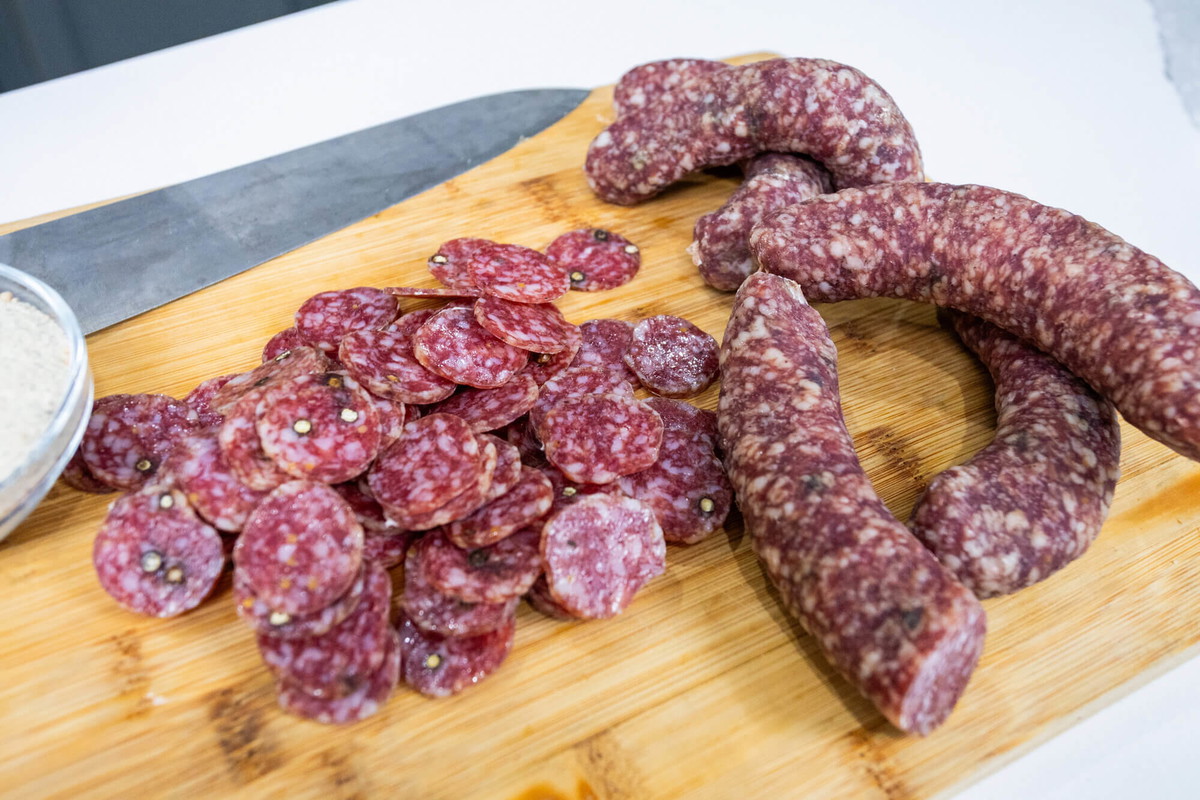
This is the salami that earns its spot on a charcuterie board. Pork butt, our #385 German Salami Seasoning, whole black peppercorns, and a six-week dry age work together to give you a firm, tangy, peppercorn-studded salami you cured at home. The culture drops the pH for that classic salami tang. The dry age pulls out the water for a firm slice and clean particle definition. The peppercorns deliver the pop. It's a project, not a weeknight cook, and the payoff is the kind of charcuterie you'd pay a small fortune for at the deli counter. Slice it thin, fan it out on a board, and let your guests guess where you bought it.
Ingredients
10 LB - Pork Butt
212 G - #385 German Salami Seasoning
10.8 G - Speed Cure (included with German Salami Seasoning Purchase
1.6 oz - Dextrose
1/8 tsp - Culture
8 oz - Distilled Water
4 oz - Peppercorns
35/38 mm Natural Hog Casings
Reserve 100 Dry Ager
Directions
Rinse the casings and soak in luke-warm water for at least 45 minutes before stuffing.
Cut the pork butt into 3” pieces so they easily fit into the grinder.
Set your grinder up with a 3/16” (4.5mm) plate and grind the meat once.
Add the culture to the water and let it sit for 5 minutes to “wake up.”
Add the seasoning, cure, water/culture, and dextrose to the meat and mix with your hands, folding and kneading.
Once the meat is well mixed and becomes tacky, add the peppercorns and mix until well incorporated.
Set up your stuffer with a 7/8” or 1” horn.
Fill the hopper with the meatblock, pressing down as you add to avoid air pockets.
Pull water through a stand of casing for a final rinse and thread it onto the stuffing horn.
Stuff the sausages.
Link the sausages every 8”
Use a sausage pricker to eliminate any air pockets in the sausage.
Reserve the remaining meat from the hopper for later PH testing. Wrap tightly in plastic wrap.
Place the linked sausages and the pH testing sample in a large bag and into the oven. With the oven off, but the oven light on, allow the sausage to ferment for 18-24 hours until the pH has dropped below 5.0.
Set your dry ager to 55 degrees Fahrenheit and 80% relative humidity.
Hang the sausage in the chamber leaving room in between each link for airflow. Dry cure for 4-8 weeks until you have lost 40-45% of the starting weight.
Un-link the sausages and vac-pack them. Freezer for up to 6 months or fridge for 2 weeks.

