

The Ultimate Guide to Smoking Brisket
Brisket is the hardest cook in BBQ. It takes patience, temperature discipline, and an understanding of what's actually happening inside the meat at every stage. Get it right and you have something that turns guests silent mid-bite. Get it wrong and you have 14 hours of effort in a dry, chewy slab.
This is the guide we wish we'd had the first time. We cover everything - buying, trimming, rub, smoke, the stall, wrapping, internal temp, and the rest that most people skip and shouldn't.
Choosing Your Brisket: Grade, Size, and Packer vs. Flat
First, what is brisket? There are two parts that make up a brisket. The “flat,” and the “point.” These two part of the brisket sit on top of each other, and have opposing grain. Which we will talk about more later when we get into the slicing process. The flat is a leaner and longer part of the brisket. This part is easily identified from the underside of the brisket, as it generally has significantly less fat, and will show the red meat flesh. The point sits on top of the flat and it is shorter and thicker. The point is more marbled than the flat, meaning it has much more fat content. The two parts are separated by a fat line.
While the two parts of the brisket are available separately, we like to smoke the full brisket. This is often called a “packer” brisket. We think the final product is much better when smoked whole, mostly due to the fat content, which adds flavor and moisture to the leaner part of the brisket as well.
| Option | What It Is | Best For | Notes |
|---|---|---|---|
| Packer brisket (whole) | Full brisket, point and flat together | Large gatherings, best results | 10 to 16 lbs; allows fat-cap management |
| Flat only | Leaner, thinner section | Smaller groups, easier to slice | Dries out faster; needs careful management |
| USDA Select | Entry-level marbling | Budget cooks, practice runs | Less forgiving; prone to dryness |
| USDA Choice | Moderate marbling | Weekend smokes, most home cooks | Best value-to-quality ratio |
| USDA Prime | High marbling; self-bastes | Special occasions, max tenderness | Worth the premium for a first attempt |
Buy bone-in packer if you can. The point provides fat that bastes the flat during the long cook - and burnt ends from the point are the reward for your patience.
Trim: Set Yourself Up for a Better Bark
When you’re ready to get going on your brisket smoking adventure, start by trimming the brisket. (make sure the brisket is cold, solid fat will be easier to trim.) If you buy your beef brisket from a butcher or local market, chances are it will be un-trimmed. You might be lucky enough to have your butcher do this for you, but if not, don’t worry, it’s not hard.
From the underside of the brisket, the side with red meat showing, only trim off any silver skin or any gray or brown areas. Silver skin won’t render in the cooking process and is not palatable. The gray/brown spots are just discolored because of the packing and processing.
With the fat cap side up, start trimming the fat off down to a ¼” thickness. Briskets generally come with a good amount of fat on top. Too much fat will not render during the smoking process and will not be a pleasant texture to bite into. Although, we also don’t want to eliminate all the fat either because, of course, fat adds flavor. We want to best smoked brisket after all.
While you're trimming the fat cap, also remove the large hard fat node that sits between the flat and the point. Hard fat doesn't render during the cook - it stays rubbery. And square off any thin, irregular edges on the flat; those thin edges overcook and dry out before the center is done.

Rub: How to Season a Brisket
Pick your favorite rub or seasoning for brisket. We used Texas Rodeo Brisket rub for a Texas style smoked brisket. This smoked brisket rub was designed for exactly this reason; A smoked brisket with all the classic flavors - Brown sugar, chili, paprika, mustard and garlic.
Before applying the rub, pat the brisket dry with paper towels and coat it with a thin layer of binder - yellow mustard, olive oil, or hot sauce all work. You won't taste it. It just helps the rub stick. Generously sprinkle the brisket rub onto the meat and gently rub it into the meat. It’s hard to use too much seasoning on brisket.

For best results, refrigerate the seasoned brisket uncovered overnight. The surface dries out slightly, the rub bonds to the meat, and you'll get a better bark because of it. If you're short on time, one hour at room temperature still works.
This will start the bond of the seasoning to the meat. Moisture will start to seep out to the meat and combine with the rub to create bark. (Bark is the black covering of the brisket after it is smoked. It’s packed with flavor.)
Set Your Smoke
First, choose the wood chips or sawdust you’d like to use. We used a hardwood blend sawdust which turned out really nice. Cherry or apple can add a slight sweetness. Hickory adds a heavier smoke flavor. Our Wood Chip to Meat Pairing Guide can be useful in picking a flavor.
Add wood at the start of the cook. After the first three or four hours the brisket's surface is too set to take much more smoke.
Now determine your time. We smoked our brisket in a 250 degree high-quality electric smoker. You can go down to 225, but you need to expect a much longer cook time for this. When you’re ready to get the brisket smoking process started, place the seasoned brisket in the smoker fat cap down to start. Later when we wrap, the brisket will be flipped in the meat smoker.
| Smoker Temp | Hours per Pound | Result | Best For |
|---|---|---|---|
| 225°F | 1.5 to 2 hrs/lb | Maximum tenderness, heaviest smoke ring | Weekend cooks with time to spare |
| 250°F | 1.25 to 1.5 hrs/lb | Best balance of tenderness and time | Most popular home approach |
| 275°F | 1 to 1.25 hrs/lb | Slightly less smoke ring, still excellent | When time is limited |
If you have a probe that can be left in the meat, use it. If not, you have to open the box to check the brisket's internal temp. This obviously allows heat to be released and can slow the cooking process.
Plan on 60-75 minutes of smoke time per pound of brisket. The total brisket smoking time will be broken into two parts. The first part is unwrapped and we will smoke the brisket until the internal temperature reaches 165 degrees. At this point, we will wrap the meat for the rest of the smoke. We used butcher paper to fully wrap the brisket. When you put the meat back in the smoker, place it fat side up. This will allow any rendered fat to seep back into the meat and retain flavor.
Continue to smoke the brisket until its internal temperature reaches 200-204 degrees. If it cooks any more, the brisket will start to fall apart. You would still be able to use it for shredded brisket, but it would be very difficult to slice and keep intact.
Understanding the Stall
At some point between 150°F and 165°F internal temperature, your brisket will stop climbing. The thermometer sits at the same reading for two, three, sometimes four hours. This is the stall, and it is completely normal.
The stall is caused by evaporative cooling. Moisture escaping the surface of the meat cools it at roughly the same rate the smoker is heating it. You are stuck in equilibrium. You have three options:
| Option | What to Do | Effect on Bark |
|---|---|---|
| Wait it out | Do nothing, keep smoker steady | Best bark, fully forms during stall |
| Wrap in butcher paper | Wrap tightly, return to smoker | Good bark, paper breathes so bark holds |
| Wrap in foil | Double-wrap tightly in heavy foil | Bark softens, but breaks stall fastest |
Our recommendation: wrap in pink butcher paper when the internal temp stalls for more than an hour, typically around 160°F to 165°F. It breaks the stall faster than waiting while preserving more bark than foil.
Know When It's Done
Temperature is a guideline, not the finish line. A brisket can read 200°F and still be tough. What you're looking for is probe tender: when you insert your thermometer into the thickest part of the flat, it should slide in with no resistance, like pushing into warm butter. If you feel any drag, give it more time. The point will often probe tender before the flat does. Always test the flat.
| What You Feel | What It Means | What To Do |
|---|---|---|
| Slides in with no resistance | Done | Pull it and rest immediately |
| Slight resistance, releases slowly | Almost there | Check again in 30 minutes |
| Noticeable drag or tight feeling | Not done | Back on the smoker, check hourly |
No probe? Insert a wooden skewer or toothpick into the thickest part of the flat. It should slide in with zero resistance. If it catches or drags, close the smoker and check again in 30 minutes. You can also check by feel - grab the wrapped brisket with tongs and give it a gentle jiggle. When it's done, it will flex and wobble like Jell-O. A stiff brisket needs more time.
Rest It
Resting your smoked brisket is just as important as the cooking process. Resting meat, whether it’s brisket or s steak or a chicken breast, allows the juices that are disturbed during the cooking process to reabsorb into the meat. If you cut into the meat too soon, it could turn out to be very dry.
Keep the brisket in the butcher paper and place it in an empty cooler with the lid closed. Let it rest for a least 1 hour. The bark will continue to solidify and the temperature of the brisket will even out.
If you need to hold the brisket longer, a dry cooler works well for up to four hours. Wrap tightly in butcher paper, then a layer of towels, and close the lid. Competition pitmasters use this method to time their cooks for judging. The brisket will stay above 140°F and continue to improve.
Slice It
Based on preference, you can slice thin or thick slices. Try not to go any thinner than ½” because the meat will dry out faster the thinner the slice.
Using a very sharp knife, slice the meat against the grain starting with the flat. As you slice the brisket, you will come to the section where the point and the flat meet. The two parts of the brisket should come apart very easily. Use the back (dull) side of the knife to coax the two pieces apart by pressing through the fat that separates the flat and point. Once separated, continue to slice the two sections against the grain.
One more thing most guides skip: slice to order when you can. Brisket dries out fast once it's cut. If you're serving a crowd, slice the flat first and leave the point whole until you need it. Leftover brisket reheats well wrapped in butcher paper at 300°F for 20 to 30 minutes, or vacuum sealed and reheated in a water bath at 150°F for an hour.

All in all, we had a 15+ pound brisket. The smoke time was just over 16 hours, and the rest time was 2 hours. It was flavorful, had great bark and served about 20 people. When done right, smoked brisket is one of the most satisfying dishes one can make. The time and patience of the brisket smoking process makes every bite worth savoring.
Brisket Troubleshooting
| Problem | Likely Cause | Fix Next Time |
|---|---|---|
| Dry, chewy flat | Pulled too early, didn't probe for tenderness, or skipped the rest | Probe the flat, not the point. Rest at least two hours. |
| No bark or pale bark | Wrapped too early, too much moisture on the surface, or rub didn't bond | Dry brine overnight uncovered. Wait until bark is set before wrapping. |
| Bitter or over-smoked flavor | Too much wood, or adding wood throughout the entire cook | Add wood only in the first three to four hours. Less is more. |
| Rubbery fat cap | Left too much fat on — over 1/4 inch won't fully render | Trim to 1/4 inch max before the cook. |
| Stall lasted five or more hours | Normal at 225°F, or smoker temp is running low | Wrap in butcher paper when stalled for over an hour to push through faster. |
| Brisket falling apart, can't slice | Overcooked past probe tender | Pull when the probe slides in with no resistance, even if temp is below 200°F. |
Frequently Asked Questions
How long does it take to smoke a brisket?
Plan on 1.25 to 1.5 hours per pound at 250°F. A 15-pound packer brisket typically runs 16 to 18 hours total. Always cook to probe tenderness, not the clock.
What temperature should I smoke brisket at?
250°F is the sweet spot for most home cooks. It balances cook time with tenderness. 225°F produces a heavier smoke ring but adds two to four hours. 275°F works when time is tight and still produces excellent results.
When should I wrap my brisket?
When the internal temperature stalls for more than an hour, typically around 160°F to 165°F. Butcher paper is the preferred wrap — it lets some moisture escape and preserves more bark than foil.
Fat side up or fat side down?
For most home smokers where heat surrounds the meat, fat side up is the default. For offset smokers where heat comes from below, fat side down protects the flat. We started fat side down and flipped when we wrapped.
How do I know when brisket is done?
Probe the thickest part of the flat. When the thermometer or skewer slides in with no resistance, like pushing into warm butter, it's done. Internal temperature at that point is usually between 195°F and 205°F, but tenderness is the real test.
How long should brisket rest?
A minimum of one hour, two hours is better. Up to four hours in a dry cooler wrapped in butcher paper and towels. Do not skip the rest — it is not optional.
Can I smoke a brisket flat instead of a whole packer?
Yes, but flats are less forgiving. Without the point's fat cap to baste the flat during the cook, they dry out faster. If using a flat, wrap earlier around 155°F, and pull as soon as it probes tender.
Smoked Brisket
PS Seasoning
16-Oct
15 minutes
Barbecue
Beef
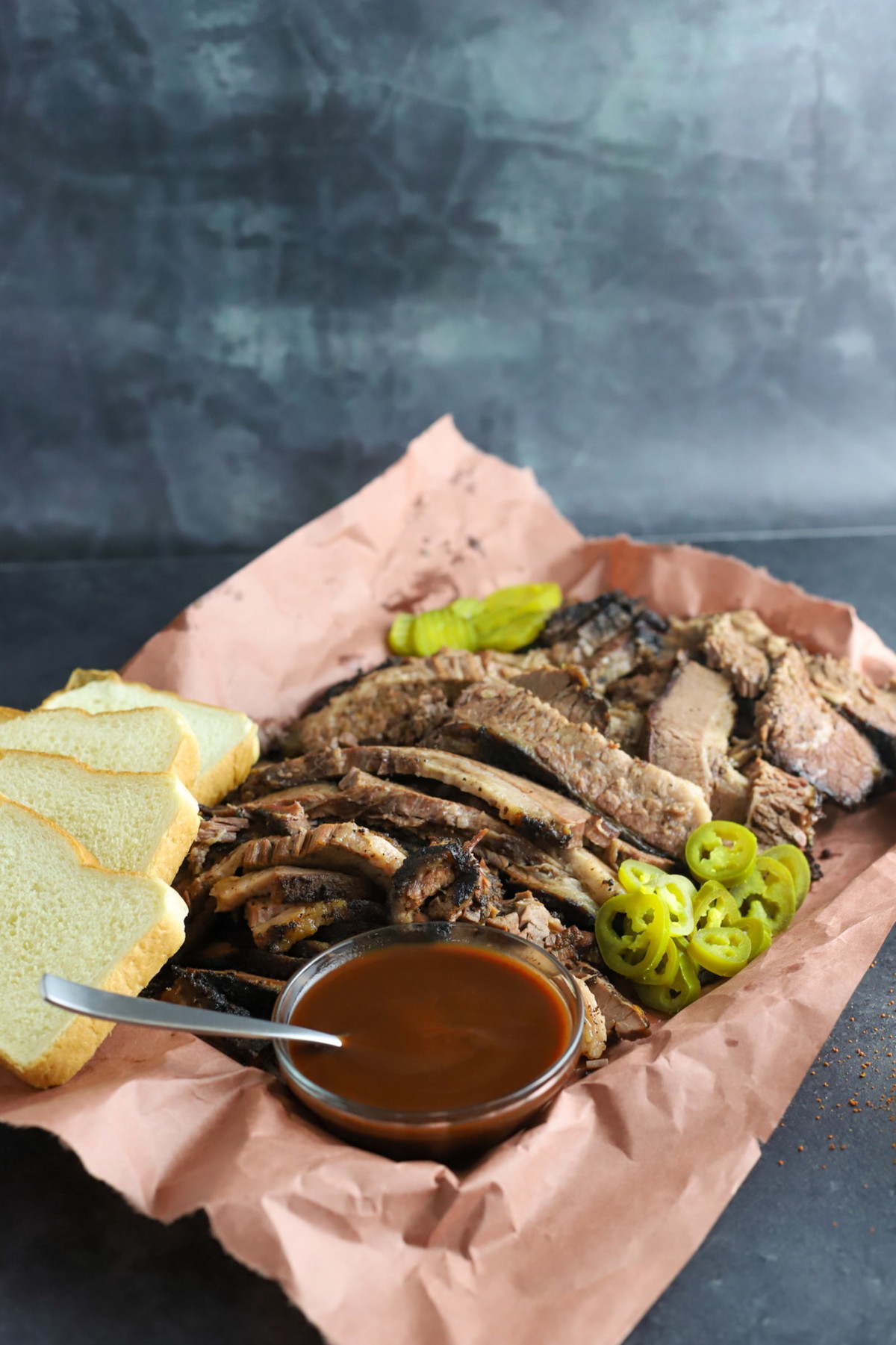
When it melts in your mouth, you know it’s good! This big boy weighs in at 16 pounds, is dripping in juices, smoky and so tender. Go ahead, make your day! This is too good to just look at!
Ingredients
12-16 Lb Brisket (Packer cut)
1 Jar Rodeo Rub Texas Brisket Rub
Directions
Trim excess fat and fat cap of the brisket down to 1/4”.
Season generously with Rodeo rub and allow to sit for 1 hour at room temp to help rub absorb and for meat to temper.
Set smoker to 250 degrees. Place the brisket in the smoker fat cap side down to start.
Smoke for 6-8 hours or until the internal temperature reaches 165 degrees.
Wrap the brisket in butcher paper, flip and return to the smoker to continue cooking for another 6-8 hours. Or until the internal temperature reaches 200 degrees.
You will want to monitor the temperature of the meat closely toward then end so as not to overcook the meat. Overcooked brisket is fine for shredding, but you will not be able to effectively slice and serve.
Place the brisket in a cooler (no ice obviously) with a tight lid and allow it to rest for 1-2 hours before serving and slicing.


1 comment
Thank you this was all great advice. I’m just getting started smoking food and can use all the help I can get